



Long before playlists were just a tap away and podcasts became part of our daily routines, radio was the voice that connected millions of people.
From the golden era of All India Radio and Aakashvani to today’s energetic FM stations filled with music, celebrity interviews, and interactive shows, radio has remained one of the most powerful forms of communication.
If you are someone who enjoys speaking, storytelling, interacting with people, staying updated on trends, and has a passion for entertaining audiences, a career in radio broadcasting could be the perfect fit.
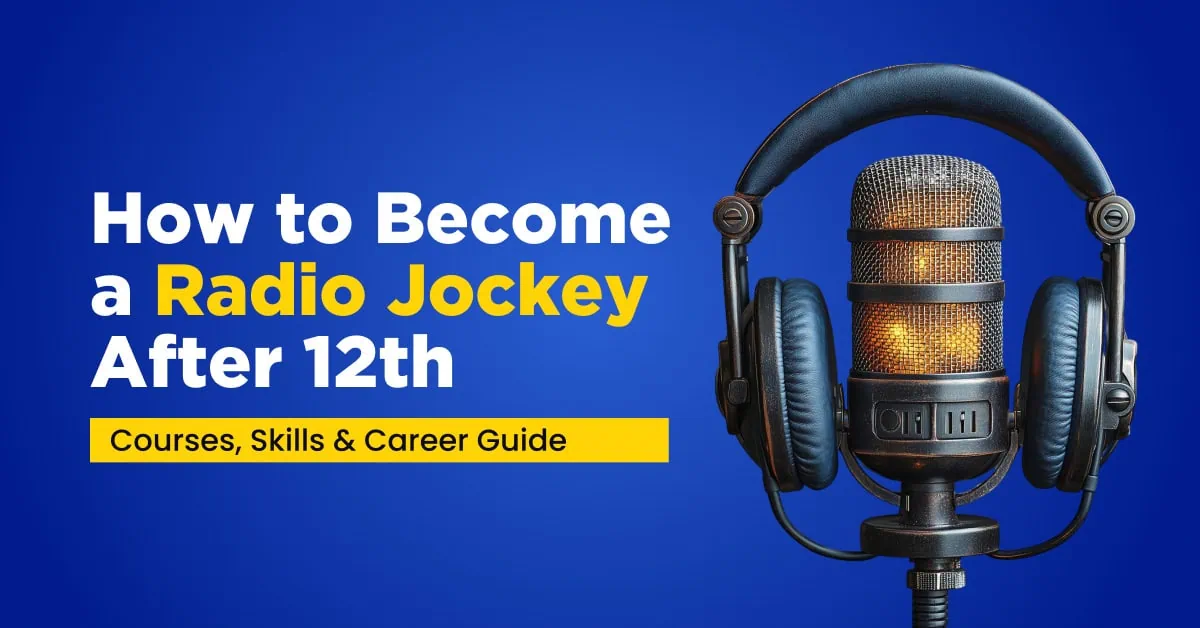
In this blog, we will help you become a Radio Jockey after 12th, the best Radio Jockey courses after 12th, essential skills required to succeed, career opportunities, salary prospects, and the steps needed to build a successful Radio Jockey career in India.
Who is a Radio Jockey?
A Radio Jockey (RJ) is a media professional who hosts radio programs, interacts with listeners, plays music, shares updates, and creates engaging conversations on-air. The Radio Jockey career is not just about speaking well; it involves creativity, spontaneity, and the ability to connect with a diverse audience.
What does a Radio Jockey Do?
An RJ’s responsibilities go beyond just speaking on the microphone. Their key roles include:
- Hosting live and pre-recorded radio shows
- Selecting music and planning show playlists
- Interacting with listeners through calls, messages, and social media
- Sharing news, entertainment updates, and announcements
- Conducting celebrity interviews and on-air discussions
- Creating an engaging and energetic on-air personality
👉 Interested in a career in broadcasting and media? Explore how a B.Sc in Media Science can help you build industry-ready communication skills.
Difference Between RJ, Podcast Host, Voice Artist, and News Presenter
While these roles may seem similar, they differ in purpose and platform:
- Radio Jockey (RJ): Works primarily on FM/online radio, focusing on live interaction and entertainment.
- Podcast Host: Creates on-demand audio content that listeners can access anytime, usually more topic-focused and less time-bound.
- Voice Artist: Provides voiceovers for ads, animations, audiobooks, and commercials without necessarily being on-air live.
- News Presenter: Delivers structured news bulletins with a formal tone, focusing on factual reporting rather than entertainment.
Each role requires strong communication skills, but an RJ stands out for their ability to think on their feet and engage audiences in real-time.
Why Choose a Career as a Radio Jockey After 12th?
Radio jockeying is a creative career where an RJ uses voice, communication skills, and personality to engage listeners through radio shows.
The demand for RJs continues to exist, but it has become more specialized. With the growth of FM channels, regional radio, and digital audio platforms like podcasts and online streaming, the industry now looks for RJs who can offer strong content, a local language connection, and audience engagement skills rather than just a good voice. This makes the RJ career in India relevant, especially in regional entertainment markets and branded audio content.
While traditional radio remains stable, the industry is evolving, and RJs often expand into related roles such as podcast hosting, voice-over work, content creation, event anchoring, and digital media presentation. This flexibility allows experienced RJs to build diverse careers beyond the radio studio.
👉 Radio jockeying is just one of many exciting media careers. Discover the opportunities offered through a B.Sc in Media Science.
How to become a Radio Jockey after 12th?
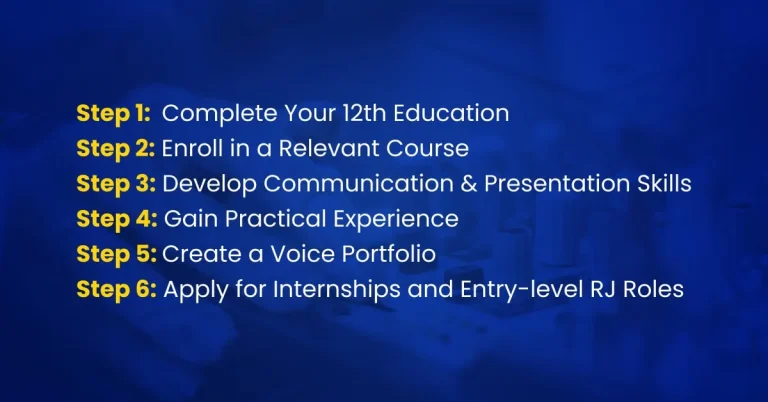
If you are wondering how to become a Radio Jockey after 12th, the journey is less about a fixed academic path and more about building the right mix of education, skills, and practical exposure. With consistent effort, students from any stream can enter this creative field.
Step 1: Complete Your 12th Education
Students from Arts, Commerce, or Science can pursue a career in radio jockeying. There is no strict subject requirement, but good communication skills at this stage are helpful.
Step 2: Enroll in a Relevant Course
After 12th, students can join diploma or degree programs in journalism, mass communication, or radio jockeying. These courses help you understand broadcasting basics, scripting, voice training, and media production.
Step 3: Develop Communication and Presentation Skills
A successful RJ must speak clearly, confidently, and creatively. Practising storytelling, improving vocabulary, and working on voice modulation are key parts of preparation.
Step 4: Gain Practical Experience.
Internships at radio stations, college radio, or local media platforms help you understand real studio environments and live audience interaction.
Step 5: Create a Voice Portfolio.
Record sample shows, voice clips, and mock radio segments. A voice portfolio helps you showcase your personality and style to potential employers.
Step 6: Apply for Internships and Entry-level RJ Roles
Start by applying for assistant RJ roles, internships, or small radio shows. Entry-level exposure helps you understand programming, audience handling, and live broadcasting.Understanding how to become a Radio Jockey after 12th requires patience and consistent skill-building, as most successful RJs grow step by step through practical experience in the industry.
Best Courses to Become a Radio Jockey After 12th
| Course | Tenure |
| Diploma in Radio Jockeying | 6 Months to 1 Year |
| Diploma in Mass Communication | 1 year |
| BA in Journalism & Mass Communication | 3 -4Years |
| BA in Media Science | 3-4 Years |
| Certificate Course in Voice Training | 3-6 months |
Skills Required to Become a Successful Radio Jockey
- Excellent Communication Skills:- An RJ must be able to speak clearly and connect with different types of audiences effortlessly. Good communication helps in making every show engaging and easy to understand.
- Strong Command Over Language:- A strong grip on language helps RJs express thoughts smoothly and avoid awkward pauses or confusion on air. It also builds credibility and keeps listeners hooked.
- Voice Modulation:- Voice modulation allows an RJ to change tone, pitch, and pace to match the mood of the show. This makes conversations more lively and prevents the delivery from sounding flat.
- Creativity and Storytelling:- Creativity helps RJs turn simple topics into interesting conversations or stories. Strong storytelling keeps listeners entertained even during long shows.
- Confidence and Stage Presence:- Confidence is key when speaking live without a script or safety net. A strong stage presence helps RJs sound natural, engaging, and in control.
- Quick Thinking and Improvisation:- Live radio is unpredictable, so RJs must think on their feet and respond instantly. Improvisation skills help them handle mistakes, calls, or sudden changes smoothly.
- Interviewing Skills:- Good RJs know how to ask the right questions and make guests feel comfortable. This leads to more natural and interesting conversations on air.
- Technical Knowledge of Audio Equipment:- Basic understanding of mixers, microphones, and software helps RJs manage shows efficiently. It ensures smooth broadcasting without technical interruptions.
👉 Curious about what you’ll learn? Explore the B.Sc in Media Science curriculum covering broadcasting, content creation, journalism, and digital media.
Top Colleges and Institutions Offering Radio Jockey Courses
Choosing the right institute plays an important role in building a successful career in radio broadcasting. Here are some well-known colleges and institutes in India that offer media, journalism, and communication programs helpful for aspiring RJs.
1. Indian Institute of Mass Communication (IIMC)
One of India’s most reputed institutes for journalism and communication studies. It provides professional training in media writing, broadcasting, and public communication, helping students build a strong foundation for careers in radio and mass media.
2. Xavier Institute of Communications (XIC), Mumbai
Known for its high-quality media education, XIC offers specialized courses in journalism, advertising, and media production. It focuses on hands-on training and industry exposure, which is valuable for aspiring radio professionals.
3. Asian College of Journalism (ACJ), Chennai
A well-known institute offering advanced training in journalism and media studies. It emphasizes reporting, communication skills, and media ethics, which are essential for building a strong career in broadcasting.
4. Symbiosis Institute of Media and Communication (SIMC), Pune
A leading media institute offering courses in mass communication and media management. It provides practical exposure through projects, internships, and industry interaction, helping students prepare for careers in radio, digital media, and entertainment.
5. Inspiria Knowledge Campus
Inspiria offers industry-oriented media and communication programs (Dept of Media Science) designed to help students develop strong communication, presentation, and digital media skills. The institution focuses on practical learning, industry exposure, and personality development, making it a strong choice for students aiming for a career in radio jockeying and digital media.
Career Opportunities for Radio Jockeys
A career in radio jockeying is no longer limited to traditional FM stations. With the growth of digital media and audio content platforms, skilled RJs can explore a variety of opportunities across the media and entertainment industry.
- FM Radio Stations:- FM radio remains one of the most popular career paths for aspiring RJs. Here, professionals host music shows, conduct interviews, interact with listeners, and create engaging content for daily broadcasts.
- Community Radio:- Community radio stations focus on local audiences and social issues. Working in this space allows RJs to educate, inform, and connect with communities while addressing topics that matter to them.
- Internet Radio:-Online radio platforms have expanded the reach of audio content beyond geographical boundaries. RJs can host niche shows and connect with listeners from different parts of the world.
- Podcast Hosting:- Podcasts have created new opportunities for audio professionals. RJs can host podcasts on topics such as entertainment, sports, business, travel, or lifestyle and build a dedicated audience over time.
- Voice-over Artist:- Many RJs use their voice skills to work as voice-over artists for advertisements, audiobooks, animated content, documentaries, and corporate videos.
- Event Host or Emcee:- Strong communication and presentation skills make RJs excellent event hosts. They often anchor corporate events, award ceremonies, concerts, and public gatherings.
- Television Presenter:- With experience and a strong on-air personality, some RJs transition into television hosting. Their ability to engage audiences and communicate confidently helps them succeed as TV presenters and entertainment hosts.
👉 Turn your passion for communication into a profession. Apply today for direct admission to the B.Sc in Media Science program.
Conclusion
Learning how o become a Radio Jockey after 12th is all about combining the right education with strong communication skills and practical experience. Wether you choose a diploma in radio jockeying, a mass communication degree, or specialized voice training, continuous learning and practice are essential for sccucess in this field.
If you enjoy talking, storytelling, and engaging with people, radio jockeying can be a rewarding profession. After all, not every career lets you turn conversations into a profession, and a microphone into a gateway to countless opportunities.
FAQs:-
ANS:- Some of the most popular courses include Diploma in Radio Jockeying, Diploma in Mass Communication, BA in Journalism & Mass Communication, BSc in Media Science, and Certificate Courses in Voice Training.
ANS:- Yes. Students from Arts, Commerce, or Science backgrounds can pursue a career as a Radio Jockey. Strong communication skills and an interest in media are more important than the stream chosen in Class 12.
ANS:- A successful RJ should have excellent communication skills, voice modulation, creativity, storytelling abilities, confidence, quick thinking, interviewing skills, and basic knowledge of audio equipment.
ANS:- A Radio Jockey typically hosts live or scheduled radio shows and interacts with listeners in real time, while a Podcast Host creates on-demand audio content that listeners can access anytime.
ANS:- While a degree is not mandatory, courses in Mass Communication, Journalism, Media Science, or Radio Jockeying can provide valuable industry knowledge and practical training.
ANS:- Voice modulation is one of the most important skills for an RJ. It helps create engaging conversations, convey emotions effectively, and keep listeners interested throughout the show.