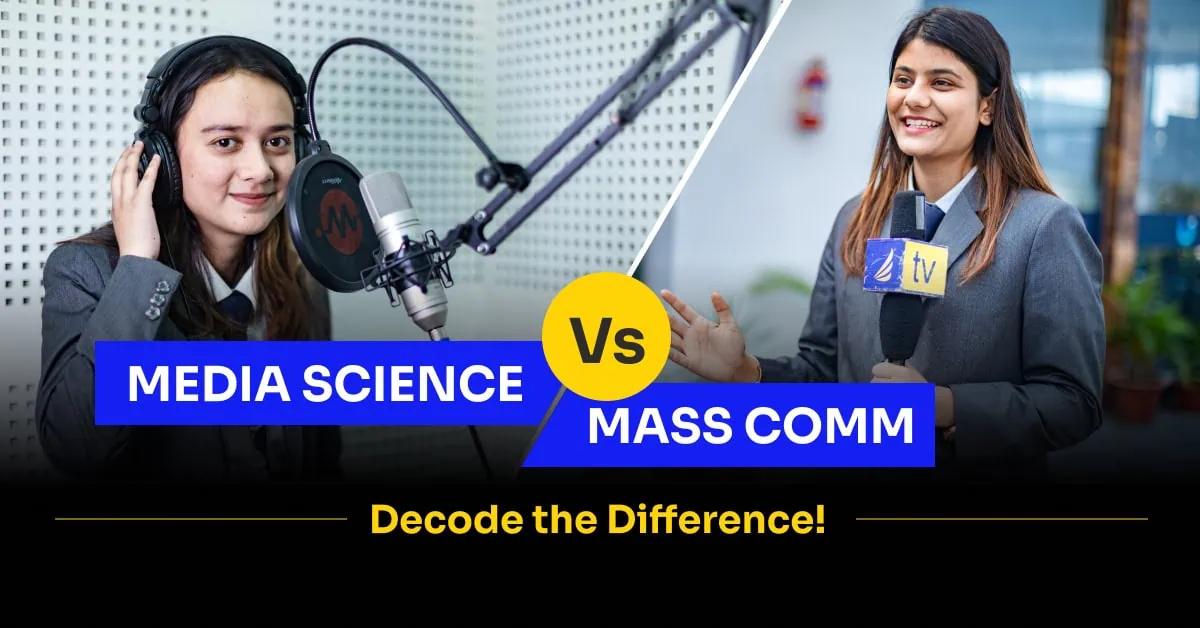
Mass Communication Vs Media Science: What’s the Real Difference?
Career Guide
Inspiria Knowledge Campus
••9 min read
You’ve just passed your Class 12 boards, and the world of media excites you, but you’re confused between choosing mass media and mass communication. People often get confused between these two terms and also use them interchangeably. However subtle but there is a difference, and if you’re wondering about the differences between Mass Communication and Media Science, this blog will help clear all your doubts.
What is Mass Communication?
Mass Communication refers to the process of sharing information, ideas, and messages with a large audience through platforms such as television, newspapers, radio, and the internet. It plays a vital role in shaping public opinion, spreading awareness, and influencing societal trends. The core focus areas of Mass Communication include Journalism, Public Relations, Advertising, Television and Radio Production, and more.
As a core component of Mass Communication and Media Science, this discipline focuses on delivering impactful messages to a broad audience. It emphasizes not only what is communicated, but also how messages are crafted, delivered, and received for maximum influence. Understanding mass communication vs media science helps students recognize that while Mass Communication focuses on message creation and dissemination, Media Science explores the technical, analytical, and digital aspects behind media platforms.
When examining the differences between media science and mass communication, it becomes clear that Mass Communication is more content-driven and audience-focused, while Media Science deals with media technology, digital tools, data, and the evolving science behind media production and consumption. Together, these fields play an integral role in modern society by ensuring information is accessible, timely, and influential across diverse demographics and regions.
What is Media Science?
Media Science is the interdisciplinary study of communication, visual storytelling, and media technology. It blends creativity with technical skills to produce compelling content across various digital platforms. It involves examining the relationship between different scientific activities, various media platforms, and their impact on society. Its key subjects include Digital Filmmaking, Animation & VFX, Photography, Graphic Design, Social Media Marketing, and more
On the other hand, Media Science is a vital component of Mass Communication, and Media Science focuses on content creation, tech tools, and storytelling. It emphasises how media is designed, produced, and distributed to engage audiences effectively.
Love writing, debating, and staying informed about current affairs
Are creative, tech-savvy, and interested in film, design, and storytelling
Starting Salary
₹2.5 – ₹4.5 LPA
₹3 – ₹5.5 LPA (may increase with technical skills)
Future Scope
Expanding scope with new-age journalism, digital PR, and media entrepreneurship
Rapid growth in OTT, content marketing, filmmaking, and YouTube monetization
Top Recruiters
NDTV, Times of India, Hindustan Times, PR Agencies
Red Chillies Entertainment, TVF, FilterCopy, Netflix India, Creative Agencies
Which Course is Right for You After 12th?
Are you a strong communicator who loves telling stories through words or speech? Or are you more of a visual thinker who enjoys editing videos, designing graphics, or capturing photos? Choosing between Mass Communication and Media Science depends on your skills, passion, and career goals. Both fields are exciting and offer strong opportunities. It is your interests and personality that will help you decide which option fits you best.
If you enjoy writing articles, reporting news, influencing public opinion, or hosting podcasts, Mass Communication might be the right choice. When exploring mass communication career paths, you will find options in journalism, public relations, advertising, content writing, radio, podcasting, and corporate communication. This is why many students interested in communication and storytelling explore mass communication vs media careers before finalizing their direction.
On the other hand, if you are passionate about editing Instagram reels, making short films, experimenting with cameras, animation tools, or content apps, then Media Science could be a better fit. A clear media science course comparison shows that Media Science is often more technical and production-focused, covering areas like video editing, cinematography, graphic design, sound production, animation, and digital media tools.
You choose, because both paths can lead to rewarding careers. The best option is the one that matches what excites you the most.
Career Opportunities in Mass Communication and Media Science
Career Opportunities in Mass Communication
A degree in Mass Communication opens the door to a variety of high-impact careers focused on delivering information, influencing public perception, and engaging audiences through various media channels. If you're passionate about current affairs, have strong communication skills, and want to be the voice that informs or influences the public, a career in Mass Communication and Media Science is a powerful choice. Here’s a deeper look at the roles available in this dynamic field:
Journalist – Gathers, investigates, and reports news stories for newspapers, television, radio, and online platforms. Journalists play a crucial role in informing the public, covering everything from politics to pop culture, often working in fast-paced, deadline-driven environments. Their salary varies with location, specialization, and experience, and ranges between ₹2.4 - ₹10 LPA.
News Anchor – Serves as the face of a news program, delivering live news, conducting interviews, and moderating discussions on television or digital news channels. A news anchor needs strong public speaking skills and the ability to stay composed under pressure. Their salary varies with location, specialization, and experience, and ranges between ₹2 - ₹11.3 LPA.
Public Relations (PR) Manager – Manages an organization’s reputation by crafting press releases, coordinating with media, handling crisis communication, and building relationships with stakeholders. PR managers work in corporate, government, or agency settings to shape public perception. Their salary varies with location, specialization, and experience, and ranges between ₹7 - ₹20 LPA
Radio Jockey (RJ) – Hosts and produces entertaining or informative radio shows, often interacting with live callers, curating music, and discussing trending topics. With the rise of podcasts, RJs are also exploring digital formats for wider reach. Their salary varies with location, specialization, and experience, and ranges between ₹1 - ₹11.3 LPA
Communication Strategist – Develops and implements communication plans to promote a brand or message effectively. They work with companies, NGOs, or political campaigns to craft narratives, manage media outreach, and drive audience engagement. Their salary varies with location, specialization, and experience, and ranges between ₹4 - ₹15 LPA
Content Writer / Editor – Creates and refines written content for blogs, news portals, magazines, and websites. Writers research, write, and tailor content to fit a specific audience, while editors ensure clarity, grammar, and tone are consistent and professional. Their salary varies with location, specialization, and experience, and ranges between ₹1.8 - ₹7.4 LPA
Advertising Copywriter – Writes catchy slogans, taglines, and persuasive ad content for print, digital, and TV campaigns. They work closely with designers and marketers to deliver messages that capture attention and drive action. Their salary varies with location, specialization, and experience, and ranges between ₹4.64 - ₹10 LPA or more.
These roles highlight the versatility and relevance of a Mass Communication degree, perfect for students with strong communication skills, a passion for storytelling, and a desire to influence public dialogue. Top recruiters for such roles are Times of India, NDTV, Zee Media, Hindustan Times, India Today Group, and leading PR agencies like Ad factors or Perfect Relations.
Career Opportunities in Media Science
A Media Science degree opens creative and tech-oriented career avenues in visual storytelling, content production, and digital entertainment. For students who enjoy experimenting with cameras, editing software, or creating viral content, a degree in Media Science can launch a successful creative career. Here’s a deeper look at the popular career paths:
Video Editor – Responsible for turning raw footage into polished, engaging video content. This includes trimming clips, adding music, transitions, color correction, and visual effects for platforms like YouTube, social media, ads, or even documentaries. Their salary varies with location, specialization, and experience, and ranges between ₹6- ₹8 LPA.
Digital Content Creator – Designs and produces content specifically for digital platforms like Instagram, YouTube, or TikTok. This could involve scripting, shooting, editing, and optimizing videos or posts to grow an audience and boost brand engagement. Their salary varies with location, specialization, and experience, and ranges between ₹2- ₹10 LPA.
Photographer / Cinematographer – Captures high-quality visual content for a range of industries such as fashion, advertising, journalism, or events. While photographers focus on still images, cinematographers handle the camera work and lighting for films and video projects. Their salary varies with location, specialization, and experience, and ranges between ₹2.4 - ₹12.3 LPA.
Animator – Creates motion graphics and animated sequences using 2D or 3D animation software. Animators work in entertainment, advertising, e-learning, gaming, and more to bring stories or concepts to life visually. Their salary varies with location, specialization, and experience, and ranges between ₹2.5 - ₹10 LPA and more.
Graphic Designer – Crafts visual elements like logos, posters, social media graphics, and layouts for websites or apps. This role involves using design software (like Adobe Photoshop, Illustrator, or Figma) to visually communicate messages and branding. Their salary varies with location, specialization, and experience, and ranges between ₹2.5 - ₹15 LPA.
Film Director / Producer – The director leads the creative vision of a film or digital video project, guiding actors, overseeing the camera crew, and shaping the narrative. Producers manage the production process, budgeting, scheduling, and coordination with various departments. Their salary varies with location, specialization, and experience, and ranges between ₹4.45 - ₹9 LPA and more.
Social Media Manager – Develops content calendars, oversees brand messaging across platforms like Instagram, X (formerly Twitter), Facebook, and LinkedIn, and analyzes audience engagement. They ensure a brand’s voice stays consistent while growing its online presence. Their salary varies with location, specialization, and experience, and ranges between ₹1.2 - ₹8.2 LPA and more.
These roles offer a mix of creativity, storytelling, and tech-savviness, making Media Science the perfect choice for students who thrive in digital spaces and enjoy creating visually captivating content. The top recruiters for such skills are TVF, FilterCopy, Red Chillies Entertainment, Netflix India, Amazon Studios, Wunderman Thompson, and boutique creative agencies or production houses.
Career options after a Media Science or Mass Communication degree
Your Media Career Starts Here – Why Inspiria is Your Best Choice
Your media career begins at Inspiria Knowledge Campus, where creativity meets industry-ready training. With a modern AV studio, Mac lab, and access to professional gear like DSLRs, gimbals, and Adobe software, students get hands-on learning from day one. Guided by mentors from the media industry, journalists, directors, and editors, you'll gain real-world insights and experience. Plus, internships with news channels, production houses, and creative agencies, along with 100% placement assistance, resume-building, and career counseling, make Inspiria the perfect launchpad for your journey in Mass Communication and Media Science.
To apply for BBA after 12th Commerce at Inspiria, you just ned to follow these simple steps.
Go to the official website of Inspiria, inspiria.edu.in
Go to the Admission section, and start with Apply Now
Complete the registration
Fill out the application form for the BBA in Accounting, Taxation, and Auditing
Submit all the required documents
Selected students will be called for the further admission process
Students can all get full scholarships and financial aid based on their merit
Frequently Asked Questions
What is the main difference between Mass Communication and Media Science?
Mass Communication focuses on sharing messages through journalism, PR, and broadcasting, while Media Science emphasizes content creation, visual storytelling, and digital tools like video editing, filmmaking, and animation. Both fields are crucial parts of today’s communication industry.
Which is better after 12th – Mass Communication or Media Science?
It depends on your interests. If you enjoy writing, reporting, and public speaking, Mass Communication is ideal. If you are passionate about cameras, editing, and visual creativity, Media Science is a better fit. Both offer strong career opportunities.
Do I need to be good at English to study Mass Communication or Media Science?
A basic understanding of English helps, but it’s not mandatory. At Inspiria, we provide training in communication and writing to help students build confidence regardless of their background.
Can I get a job after completing a Media Science or Mass Communication degree?
Yes, absolutely! Graduates from Inspiria have been placed in companies like TVF, The Telegraph, Zee Media, and more. Careers include journalist, video editor, filmmaker, content creator, PR executive, and many more.
What tools and software will I learn in the Media Science course at Inspiria?
You’ll learn Adobe Premiere Pro, Photoshop, Lightroom, After Effects, Final Cut Pro, DSLR handling, studio lighting, and more. We provide hands-on training in our AV Studio and Mac Lab.
Is CUET mandatory for admission into Media Science at Inspiria?
No, CUET is not mandatory. Students can apply directly after completing their Class 12 from any stream. Check the Media Science admission process for full details.
What is the duration and fee structure of the Media Science course at Inspiria?
The B.Sc in Media Science is a 3-year undergraduate program. For the latest fee structure, scholarships, and admission details, visit our official course page or apply now.
What areas does Mass Communication cover?
Its core focus areas include journalism, public relations, advertising, and television and radio production, emphasising how messages are crafted, delivered and received for maximum influence.