



In this age of digital creativity, ‘design’ has evolved into a significant keyword that defines the very way we experience spaces, identify brands and plan the visual imagery round us.
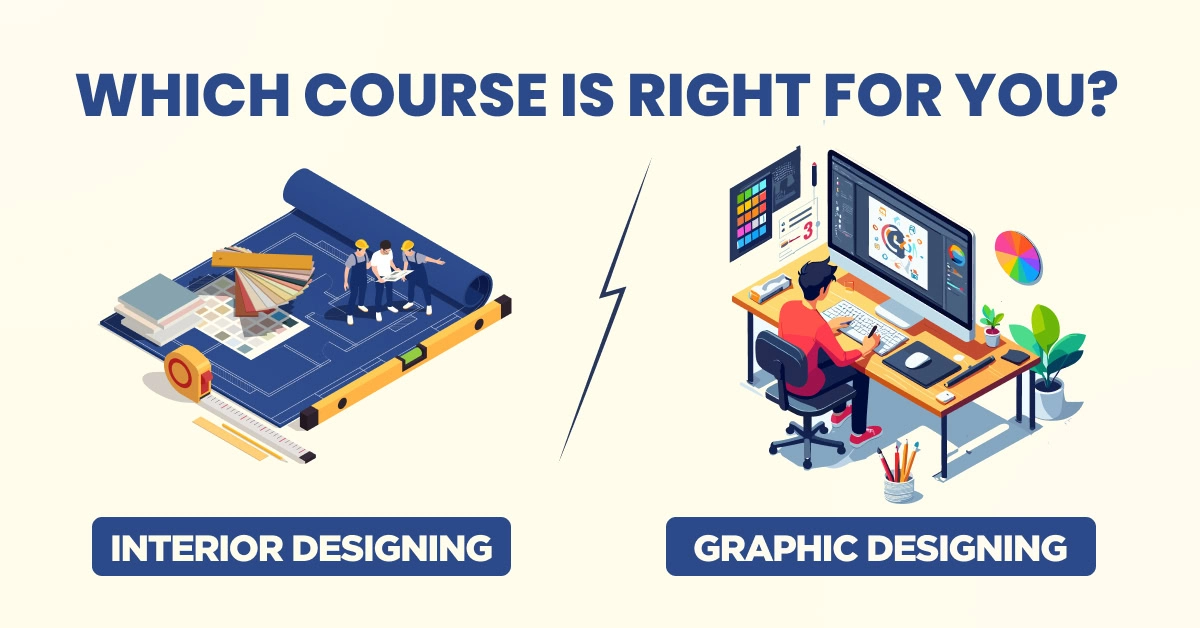
For young students aiming for a creative career, there are two creative professions that they can aspire to – Graphic Design and Interior Design.
Not only are these two professions lucrative, they are also aesthetically rewarding. However, though both these vocations deal with design, they are quite different when one considers the skills, tools, functions of each.
In this blog, we shall delve deep into the functional areas of graphic designing as well as interior designing in order to enable students to decide which of these two profession should they choose, considering their natural skills, interests and career aims.
Graphic Design Vs Interior Design – Quick Comparison Overview
A quick look at the table below will add clarity into the core differences between graphic designing and interior designing.
ASPECTS | GRAPHIC DESIGN | INTERIOR DESIGN |
Core Functional Area | Visual Media | Indoor & Outdoor Spaces |
Medium Used | Print, Digital, Outdoor Media (such as billboards) | Physical interiors & exteriors |
Tools/Apps | Visual Media software (Photoshop, Illustrator etc.) | CAD software, materials, artefacts |
End Product | Print Media (Billboards, Flyers, Logos, Advertisements etc.) and digital platforms (websites, blogs etc.) | Offices, homes, landscapes, event platforms |
Career Positions | Marketing, Media, branding | Real estate, décor, architecture |
Skills Required | Creativity, print media designing | Lighting, spatial designing |
What Is Graphic Design?
Graphic Design is the crafty use of typography, colors, images and layouts to beautify visual communication experiences and create brand identities.
The objective is to create visuals on print and digital communication platforms to inform, engage and also persuade people. Whether it’s brand logos, advertisements or social media posts, graphic design has a crucial role in modern-day marketing through visual communication.
👉 See what you’ll actually learn in a Graphic Design degree.
Graphic Design Meaning & Scope
Graphic Design blends technology with creativity to deliver highly effect and persuasive visual content for primary use in media, publishing, advertising, digital marketing and entertainment.
Scope: Graphic design is extensively used in
- Motion graphics and animation
- Packaging and publication
- Branding and identity creation
- Advertising and marketing campaigns
- UI/UX design for websites and apps
With the advent of digital platforms, the scope of graphic design has enhanced significantly, opening diverse opportunities for independent media creators and producers.
Skills Required for Graphic Design Course
It is essential for students to develop the following the creative and technical skills if they want to succeed as graphic designers:
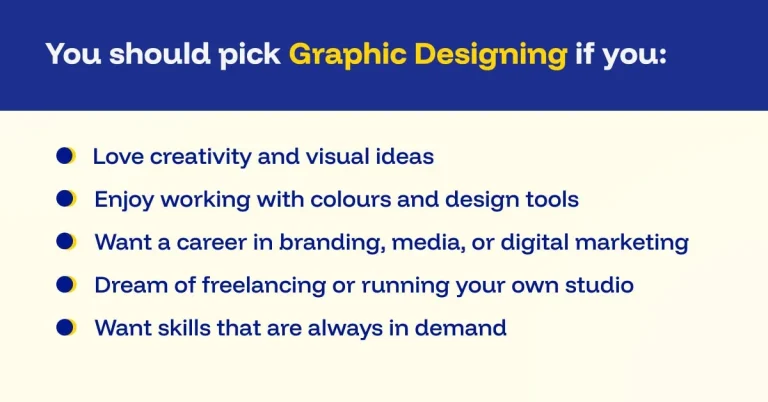
- A natural creative urge and strong visual conceptual skills.
- Basic knowledge of typography and color theory
- Must know designing software such as Adobe Photoshop, InDesign, Illustrator)
- Fundamentals of UI/UX design
- Above average communication skills
- Time management skills
👉 Review the Graphic Design curriculum and practical modules.
Career Options After Graphic Design Course
After successful completion of a graphic design course students can aspire for the following career positions:
- Graphic Designer:- Creates eye-catching designs like logos, posters, banners, and social media posts that bring ideas to life.
- Digital Marketing Designer:- Designs creatives for ads, websites, and social media that help brands get noticed and grow online.
- Designer of Brand Entity:- Shapes how a brand looks and feels by creating logos, colours, fonts, and a strong visual identity.
- UI/UX Designer:- Designs apps and websites that look good, feel smooth, and are easy for users to navigate.
- Visual Designer:- Focuses on making content visually attractive and consistent across digital and print platforms.
- Motion Graphic Artist:- Creates animated visuals and videos used in ads, reels, films, and digital campaigns.
- Freelancer Designer:- Works independently, takes up exciting projects from different clients, and builds a flexible design career.
👉 See career paths Graphic Design students pursue after graduation.
What Is Interior Design?
Interior designing is all about beautifying spaces and making them more efficient and pleasant. Whether it is your bedroom or living room, your office space or your lawn and garden, interior designing ensures that you not only make optimum use of your spaces but also add aesthetic value with a strong sense of beauty and balance.
The aim of interior designers is to make both indoor and outdoor spaces comfortable, visually appealing, and functional. Planning layouts, designing lighting, and selecting the right furniture and materials form the core of interior designing. When comparing graphic design vs interior design, both disciplines focus on visual communication and user experience, though they operate at different scales.
There is a strong relationship between graphic and interior design, as both rely on principles such as color theory, composition, balance, and spatial awareness. In fact, many creative professionals benefit from developing combined graphic and interior design skills, allowing them to create cohesive visual identities across physical spaces and design elements.
👉 Explore the Interior Design program with hands-on studio learning.
Interior Design Meaning & Scope
Interior Design is the art as well as profession of designing interior as well as exterior (outdoor) environments to enhance beauty, efficiency and productivity and improve overall quality of life.
Scope of Interior Design:
- Designing residential spaces (homes, apartments)
- Designing commercial spaces (offices, malls, retail stores)
- Designing hotel/hospitality spaces (hotels, resorts)
- Designing healthcare facilities
- Delivering eco-friendly and sustainable design solutions
With the rapid growth of urbanization and the shift to more comfortable and fashionable lifestyles, the interior designing sector is expected to witness persistent growth.
Skills Required for Graphic Design Course
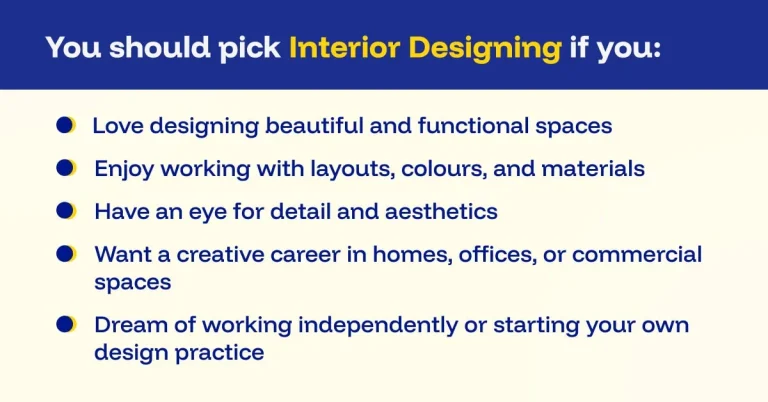
Like graphic designers, interior designers need to be creative, technically savvy and capable of improvising their creativity with a practical understanding of spatial attributes. These skills include:
- An understanding of spatial attributes
- Communication and client-handling skills
- An inborn sense of creativity, symmetry and balance
- Understanding of materials, textures, and lighting
- Knowledge of designing software (SketchUp, AutoCAD, 3Ds Max)
- Project management and budgeting
👉 Take a closer look at the Interior Design course syllabus.
Career Options After Interior Design Course
Interior design graduates can avail diverse career opportunities in various sectors. Prominent career positions include:
- Interior Designer:- Plans and designs beautiful, functional indoor spaces by choosing layouts, colours, materials, and furniture.
- Residential Space Designer:- Designs comfortable and stylish homes, including bedrooms, kitchens, and living spaces tailored to client needs.
- Independent Designing Consultant:- Works independently with clients, offering expert advice and design solutions for homes, offices, or commercial spaces.
- Commercial Space Planner:- Designs functional and attractive spaces for offices, hotels, retail stores, and restaurants to improve user experience.
- Designer of Furniture/Fixtures:- Designs custom furniture and fixtures that combine comfort, functionality, and aesthetics.
- Set Designer:- Creates visual setups for films, TV shows, theatre, and events by designing realistic and creative environments.
- Lighting Designer:- Plans lighting for interiors, events, and sets to enhance mood, visibility, and overall design impact.
Experienced interior designers can set up their own independent consultancy firms for architect and developer clients.
Why Study Graphic Design or Interior Design at Inspiria Knowledge Campus
Inspiria Knowledge Campus UG programs in designing include a practical, industry-focused learning approach in both Graphic Design and Interior Design. The course emphasizes on internships and industry visits which provide practical insights into the way the designing sector functions.
Instead of short-term diplomas, Inspiria offers a full time B.Sc. degree course in interior designing that instils in students a deeper foundation in creative thinking, communication skills and designing conceptions.
Key Advantages of studying at Inspiria:
- Industry-aligned course structure
- Highly capable faculty team with industry exposure
- Regular participation in workshops and live projects
- Latest state-of-the-art labs and design studios
- Internship and placement support
- Emphasis on creativity, innovation, and portfolio development.
Conclusion
Thus, you can see that both Graphic Design and Interior Design are exciting, lucrative, and mentally rewarding career paths, though they specialize in two different areas under the broader design category.
If you enjoy digital creativity, visual storytelling, branding, and working with media and technology, then Graphic Design may be the right choice for you.
On the other hand, Interior Design is ideal if you have a passion for spaces, architecture, materials, and transforming environments.
Ultimately, the choice is yours. What can be assured is that both fields represent strong career trends of the future. The market is continuously expanding, the earning potential is attractive, and most importantly, you get to pursue a profession you genuinely enjoy. Many modern careers even blend interior design with graphic design, combining visual design and space planning to create impactful environments.
Instead of delaying your decision, take a confident step toward the path that aligns with your passion and leads to long-term success. For more details, you are welcome to get in touch with us.