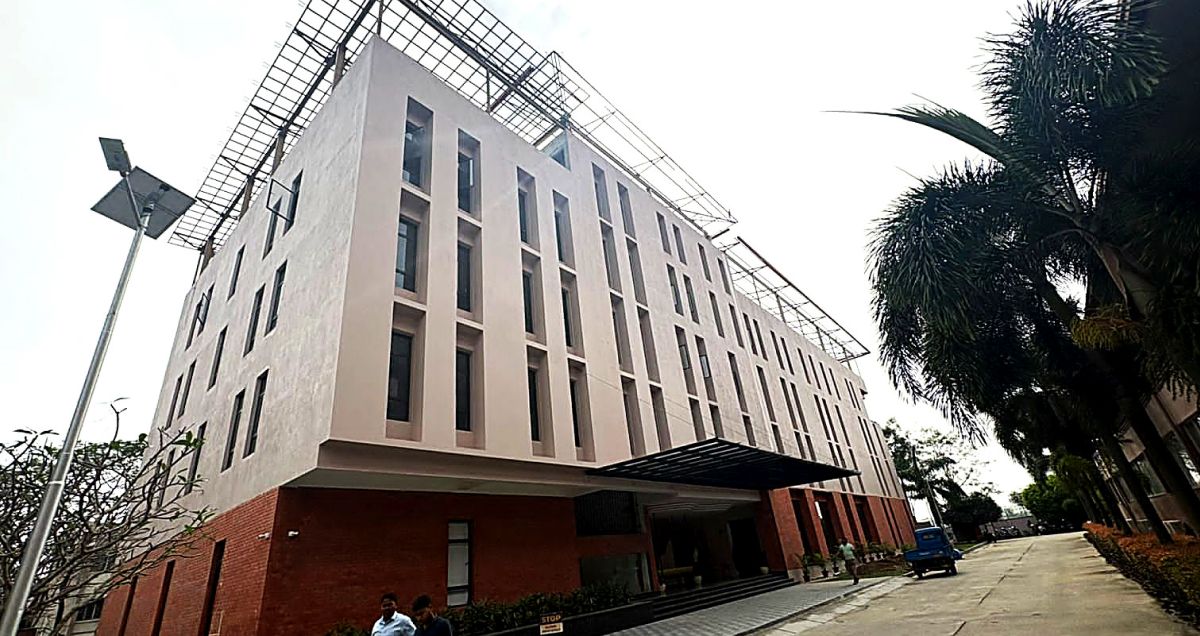
Siliguri is generous with rain and stingy with everything after it. On a campus that receives no water from any civic supply, Inspiria decided the rain that falls here should stay here, and go back into the ground it came from.
In Short
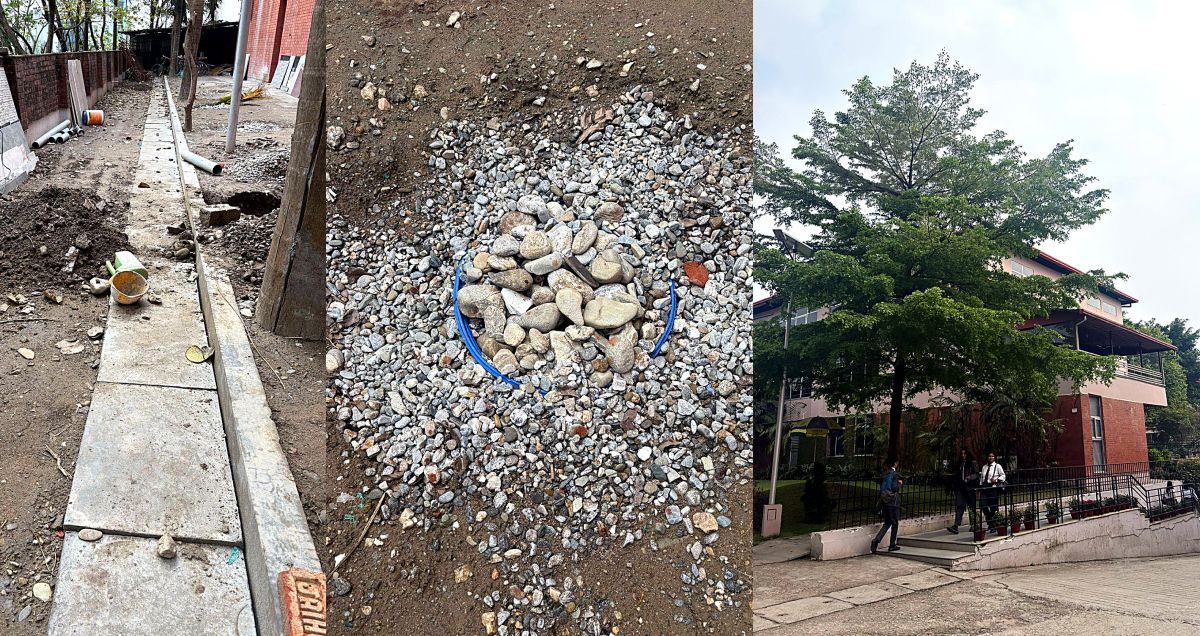
Inspiria has built an eight-unit rainwater recharge system into Block B — three pits at the front and five at the rear — that catches rain running off the building and sends it back down into the earth to refill the local water table. It makes Inspiria one of the few educational institutions in North Bengal to engineer active groundwater recharge into new construction, rather than treating sustainability as an afterthought. The system builds on a proven three-pit pilot at the Library Block and points toward a full-campus green vision.
Every monsoon, Siliguri gets between 2,800 and 3,500 millimetres of rain. It is one of the wettest places most people will ever stand in. And every dry season, the same city goes looking for water it cannot find. The rain arrives, drums on the rooftops, sheets across the roads, and rushes straight into the drains — gone before the ground below has had a chance to drink.
Two decades of fast construction have paved over the soil that used to soak it up. Roads, buildings and concrete plazas now shed water instead of absorbing it. The result is a city that floods in July and runs short in April, with a water table that drops a little lower each year.
Inspiria sits inside that same equation, with one added truth: the campus receives no water support from any civic authority. Whatever the five acres need, the five acres must find and manage for themselves. That reality could have been treated as a burden. Instead, it became the reason to do something most institutions never bother with — to give water back to the ground, deliberately, by design.
A decision made at the foundation stage
Sustainability is easy to bolt on and hard to build in. The difference shows up in where the decision gets made. At Inspiria, rainwater recharge was not a plaque added after the ribbon was cut; it was drawn into the plans before the concrete was poured.
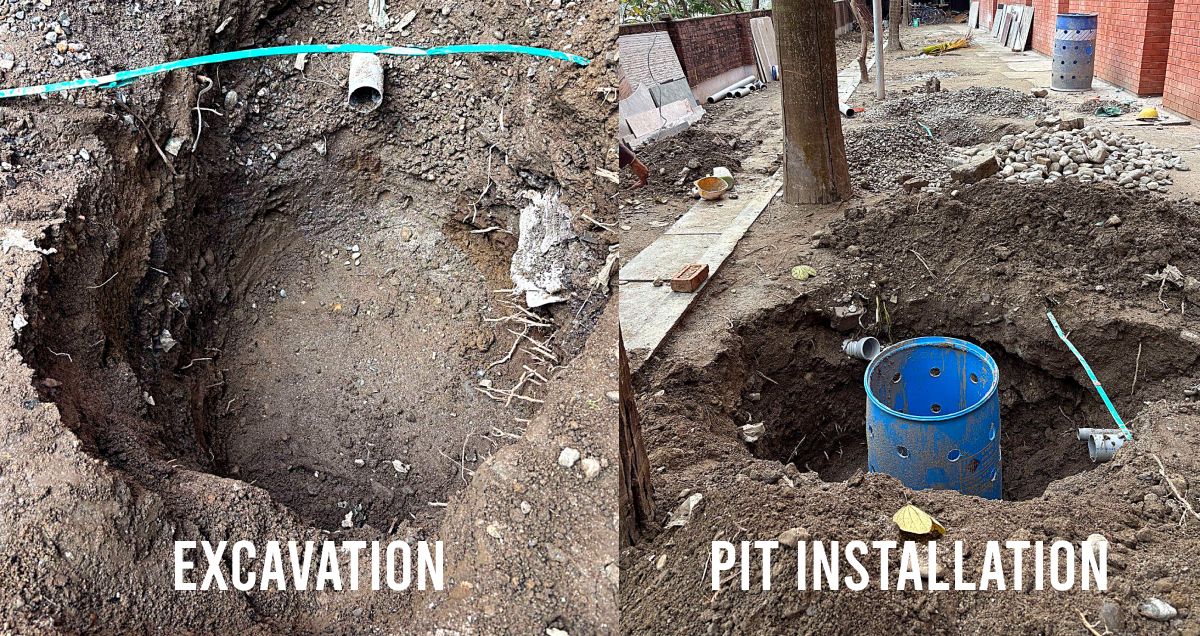
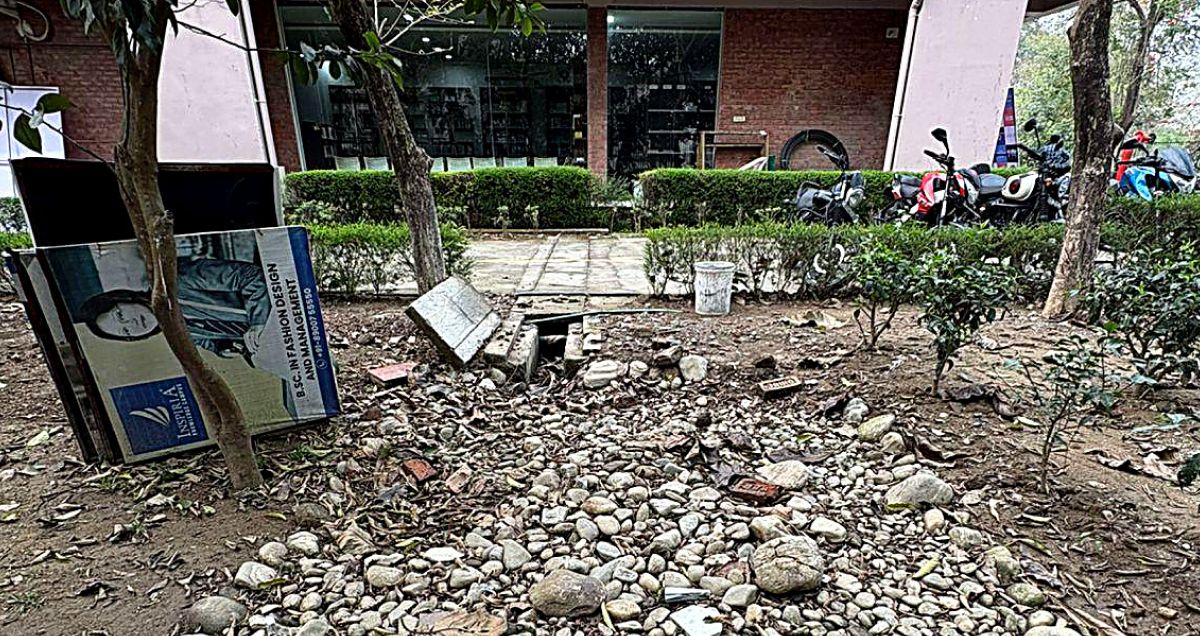
The idea was tested first at the Library Block, where three recharge pits proved the concept on campus soil. Block B is the next chapter — eight engineered pits ringing a single building, expanding both the coverage and the capacity. The road ahead is already sketched: permeable paving, rooftop harvesting and small wetlands that would turn the whole campus into a catchment.
One of the few educational institutions in North Bengal to engineer active groundwater recharge into new construction.
What a recharge pit actually does
A recharge pit is a quiet piece of engineering. A conventional drain has one job — move water away. A recharge pit does the opposite. It holds the rain for a moment, lets it settle and filter, and guides it gently down through the soil into the aquifer below, replacing what a busy building draws out.
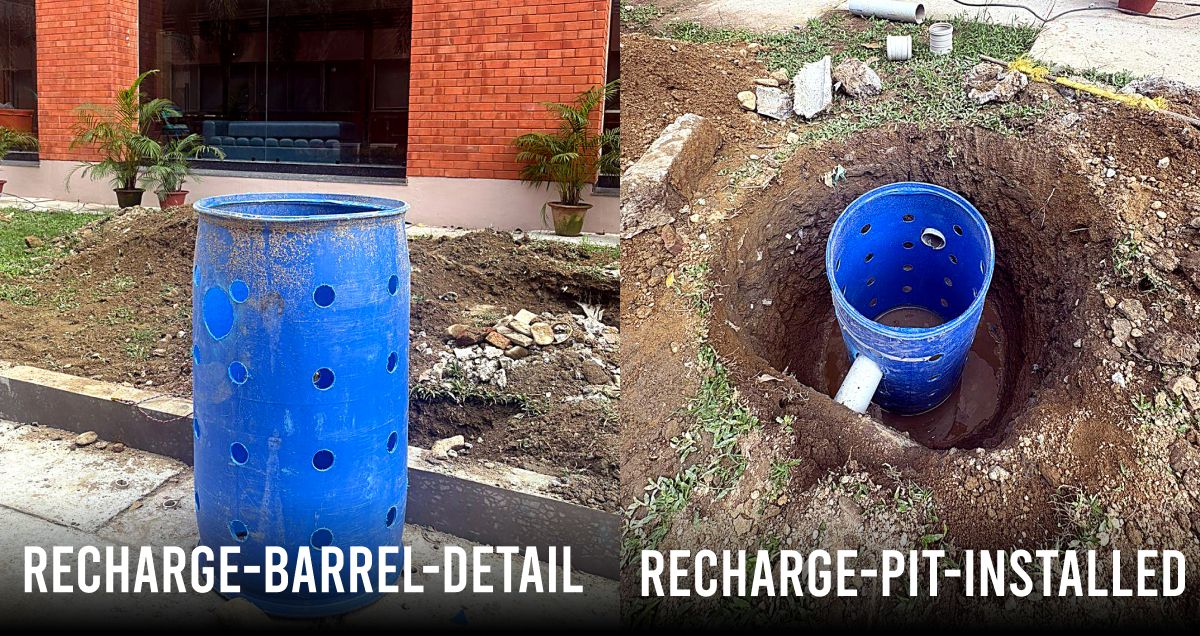
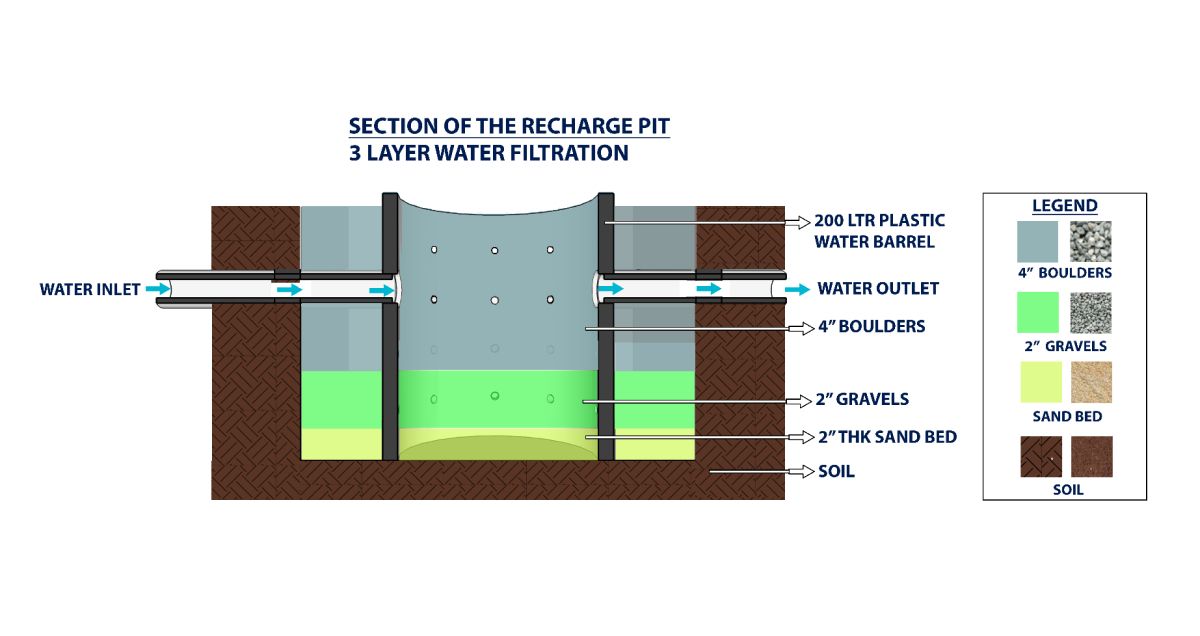
The path the water takes at Block B is simple by intent. Rain runs off the terrace and down the roof pipes into a collection channel. It enters a settling barrel, where the first grit drops out. From there it passes through three filtration layers — boulders, then gravel, then a bed of sand — that strain out the suspended solids before the clean water reaches the earth. On the rare day the rain is too heavy to absorb all at once, an overflow line carries the excess to the drain, so the system never causes the waterlogging it exists to prevent.
Nothing about it is loud. There are no pumps to hear, no readouts to watch. Eight covered pits sit around Block B doing patient work every time it rains.
Why it matters beyond the campus wall
The most direct gain is the one underfoot. Every cubic metre of rain that percolates through the eight pits is a net addition to the regional water table — small in a single shower, substantial across seasons and years.
The benefits do not stop at the boundary. By soaking up rainfall where it lands, the pits reduce the surge of water pushed into the local storm drains during a downpour, which eases flood pressure on the streets and low-lying stretches around the campus. Below ground, the added moisture keeps campus soil alive through the dry months, feeding the trees and green spaces that in turn cool the air and support the small ecosystem a campus quietly hosts. Wetter soil and a fuller canopy take the edge off the urban heat that concrete traps.
Learning you can stand on
For a knowledge campus, infrastructure is never only functional — it is teaching material. Block B is a live case study for students of civil and environmental engineering, architecture, environmental science, geography and management, who can read percolation rates, watershed logic and sustainable-development frameworks off a working system rather than a textbook diagram.
Inspiria does not only teach sustainability. It builds it, and then invites students to study what it built.
Setting a standard, not meeting a minimum
National frameworks already point this way. The Bureau of Indian Standards calls for rainwater harvesting and recharge in institutional construction, the Central Ground Water Authority urges recharge systems in water-stressed and rapidly urbanising areas, and West Bengal's conservation directives reinforce both. Block B does not merely tick those boxes — it goes past them, embedding eight engineered pits around one building and offering the region a working reference model for how an educational institution can build responsibly.
To keep the system honest over time, the plan includes bi-annual maintenance of the filters and gravel, monitoring wells to track how the water table responds, field-study integration for students, and campus tours for schools, government bodies and community groups, so the idea travels beyond the gate.
Three pits at the front. Five at the rear. Together they form a ring of responsibility around a building meant to house the minds of the future — quietly doing what every good institution hopes to do. They give back more than they take.
Responsible building · Purposeful learning · Meaningful giving