


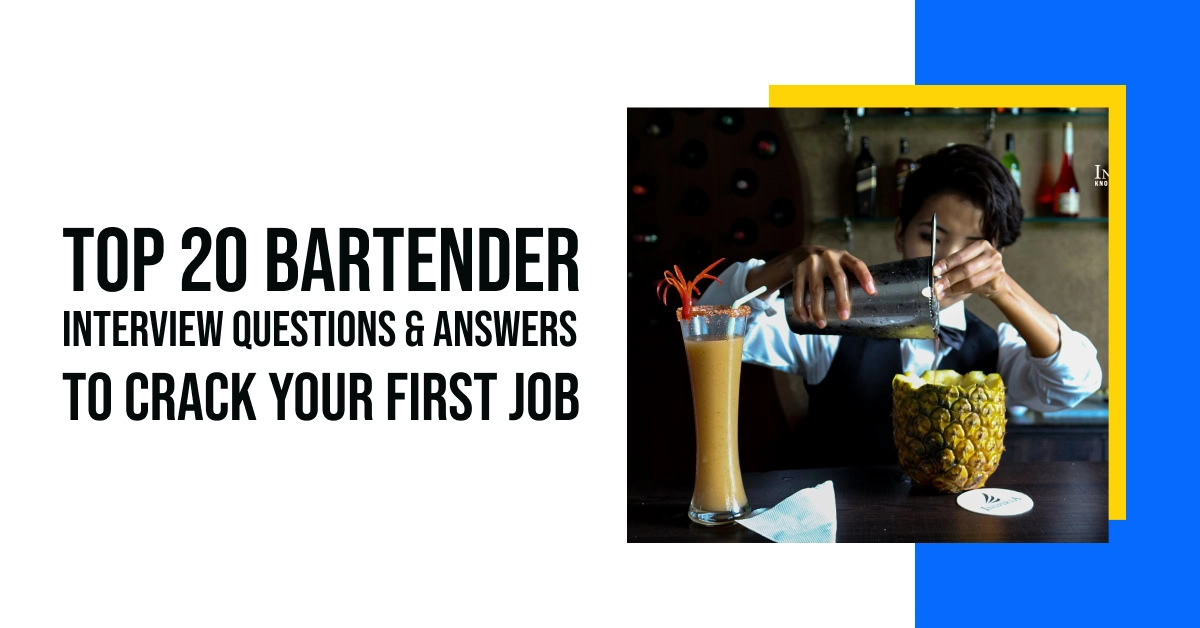

Bartending is often seen as easy, but it’s actually one of the most dynamic and rewarding roles in the hospitality industry. It’s a profession that blends creativity, people skills, and growing knowledge of ingredients to create great experiences.
Bartender Interviews can be competitive and challenging because the role blends technical mixology, service recovery, and compliance under pressure. In this blog, we will help you with the top 20 bartender interview questions and will also give you some sample answers, which will help you crack your first job.
Why is preparing for a bartender interview important?
Interviews are an important phase that decides whether you’ll get the job or not. Just like that, preparing for a bartending interview is important because the hospitality industry runs on practical skills, and interviewers check not only your technical skills but also your personality and professionalism.
Also, first impressions are the key to making a significant impact on the interviewers, which might be beneficial in the decision-making process of the interview. And being prepared helps you build confidence, which can help you deal with any questions.
👉 Want to start your career in hospitality? Explore professional courses that prepare you for real-world roles.
Basic Bartender Interview Questions (For Freshers)
1. Tell me about yourself
Sample Answer- I’m a friendly and responsible person with a strong interest in the hospitality industry. I enjoy interacting with people and making sure they have a good experience. I’m a quick learner, can stay calm under pressure, and I’m really motivated to learn bartending skills and grow in this role.
2. Why do you want to become a bartender?
Sample Answer- I want to become a bartender because I enjoy working with people and being in a lively environment. I’m interested in learning about different drinks and improving my knowledge and skills. It’s a role where I can be both creative and interactive, which really suits my personality.
3. What skills are required to be a bartender?
Sample Answer- I think a bartender needs good communication skills, patience, and the ability to stay calm during busy hours. Basic knowledge of drinks, attention to detail, and teamwork are also important. Most importantly, providing good customer service is the key.
4. How do you handle difficult customers?
Sample Answer- I would stay calm, listen carefully to the customer, and try to understand their concern. I’d respond politely and do my best to solve the issue. If needed, I would involve a senior or manager, but I’d always make sure the situation is handled respectfully.
5. Are you comfortable working night shifts?
Sample Answer- Yes, I understand that bartending often requires working night shifts and weekends. I’m comfortable with that and ready to adjust my schedule as needed for the job
Technical Bartender Interview Questions
6. What are the basic bar tools?
Sample Answer- Some basic bar tools include a shaker, which is used to mix cocktails, a jigger, which helpsin measuring precise quantitieses of alcohol, A strainer which ensures ice or fruit pieces don’t end up in the final drink, a bar spoon which is used for stirring layered cocktails., a muddler which helps in crushing herbs or fruits and a bottle opener which is essential for quick service. Together, these tools allow bartenders to prepare drinks efficiently and maintain consistency.
7. What is the difference between shaking and stirring?
Sample Answer- Shaking and stirring are two different mixing methods used, depending on the cocktail. Shaking is typically used for drinks that contain juices, syrups, or cream because it blends ingredients thoroughly and chills them quickly. While Stirring, on the other hand, is used for spirit-forward cocktails like those made primarily with whiskey, gin, or vodka. It mixes the drink without diluting it too much and keeps it clear and smooth.
8. Name some popular cocktails
Sample Answer- Some popular cocktails include Mojito, Margarita, Martini, Old Fashioned, Cosmopolitan, Daiquiri, and Manhattan. Each of these drinks has its own unique flavour preparation method.
For example, a Mojito is refreshing and minty,, while an Old Fashioned is more spirit-forward and strong. Being familiar with popular cocktails helps bartenders confidently handle common customer orders.
9. How do you measure alcohol properly?
Sample Answer- Alcohol is typically measured using a jigger to ensure consistency and responsible serving. A standard jigger usually has two sides, such as 30 ml and 60 ml, depending on the bar’s serving standards. Measuring properly helps maintain drink quality, prevents over-pouring, and ensures inventory control. It also helps bartenders follow legal and safety guidelines while serving alcohol
10. What is responsible serving?
Sample Answer- Responsible serving means serving alcohol safely and professionally. It involves checking IDs to verify legal drinking age, monitoring guests for signs of intoxication, and refusing service when necessary. Responsible serving also includes offering water, suggesting food, and arranging safe transportation if needed. The goal is to create a safe environment for both customers and staff while maintaining professionalism.
👉 Develop the right skills to impress employers-start your journey with expert-led training.
Customer Service Bartender Interview Questions
11. How would you handle an intoxicated guest?
Sample Answer- Handling an intoxicated guest requires calmness and professionalism. I would politely stop serving more alcohol and offer water or food instead. It’s important to speak respectfully and avoid confrontation while clearly communicating that I cannot serve additional drinks for their safety. If needed, I would inform a supervisor and help arrange safe transportation such as a cab. The goal is to ensure the guest’s safety and maintain a comfortable environment for everyone.
12. How do you manage multiple orders?
Sample Answer- Managing multiple orders requires organization and prioritization. I would first acknowledge all customers so they know I’ve seen them, then prepare drinks in a logical sequence—usually starting with simpler ones or batching similar orders together. Staying calm, keeping the workstation clean, and using memory techniques or order tickets helps avoid mistakes. Effective time management ensures quick service without compromising drink quality.
13. How do you upsell drinks?
Sample Answer- Upselling drinks is about making helpful suggestions rather than pushing sales. I would recommend premium spirits, signature cocktails, or pairings based on the customer’s preferences. For example, if someone orders a basic cocktail, I might suggest a top-shelf version or a popular house special. Appealingly describing flavors and ingredients encourages customers to try something new while enhancing their experience.
14. What would you do if a customer complains?
Sample Answer- If a customer complains, I would listen carefully without interrupting and acknowledge their concern. I would apologize sincerely, even if the issue wasn’t directly my fault, and offer a quick solution such as replacing the drink or correcting the order. Staying calm and professional is key. After resolving the issue, I would thank them for their feedback and ensure they leave satisfied.
15. How do you ensure hygiene at the bar?
Sample Answer- Ensuring hygiene at the bar is essential for customer safety and professionalism. I would regularly clean and sanitize the bar counter, tools, and glassware. Proper hand hygiene, using fresh garnishes, and storing ingredients correctly are also important. I would avoid cross-contamination by using clean cloths and separate tools when needed. Maintaining personal grooming and keeping the workspace organized helps create a clean and safe bar environment.
Advanced Bartender Interview Questions
16. What is your favourite cocktail to prepare?
Sample Answer- My favourite cocktail to prepare is a classic Mojito because it allows me to balance flavors while showcasing technique. Muddling fresh mint, measuring ingredients accurately, and finishing with the right level of carbonation creates a refreshing drink. I enjoy making it because it requires attention to detail and offers a great opportunity to present something visually appealing and well-balanced to the customer.
17. How do you maintain bar inventory?
Sample Answer-Maintaining bar inventory involves regular stock checks, tracking usage, and minimising wastage. I would monitor fast-moving items, update inventory records, and inform management when supplies are running low. Proper storage of spirits, mixers, and garnishes is also important to maintain freshness. By following a systematic approach, I can ensure the bar runs smoothly without shortages during service.
18. How do you work under pressure?
Sample Answer- I work well under pressure by staying organized and focused on priorities. During busy hours, I remain calm, prepare similar orders together, and maintain a clean workspace to avoid confusion. Clear communication with team members also helps ensure smooth service. By keeping a positive attitude and managing time efficiently, I can deliver quality drinks even in high-pressure situations
19. What makes you different from other candidates?
Sample Answer- What makes me different is my combination of technical skills and a strong customer service approach. I focus not only on preparing drinks accurately but also on creating a welcoming experience for guests. I pay attention to detail, maintain hygiene standards, and stay calm during busy hours. My willingness to learn new recipes and adapt to different environments also helps me grow as a bartender.
20. Why should we hire you?
Sample Answer- You should hire me because I bring professionalism, teamwork, and a customer-first mindset. I understand the importance of consistency, responsible serving, and maintaining a positive atmosphere at the bar. I am reliable, quick to learn, and capable of handling busy shifts while ensuring quality service. My goal is to contribute to customer satisfaction and support the overall success of the establishment.
Download the ‘Bartending Interview Q&A‘ PDF below and ace your interview!
Skills Employers Look for in a Bartender
- You must have a solid understanding of spirits, ingredients, and professional cocktail techniques. For example, being able to create a balanced Negroni or recommend a local gin for a G&T shows real technical ability and core skills in bartending.
- You must be highly agile to work in a fast-paced environment to juggle multiple drink orders, guest requests, and team communication. Whether it’s a Friday night rush or a private event, staying calm is one of the most vital bartender skills.
- Strong communication and being friendly and approachable while staying efficient creates a great quest experience. A quick chat and a warm smile, or even remembering someone’s favourite drink, can be one of the biggest skills.
- Hygiene is a high standard for bartenders, from handwashing to regular sanitizing of workspaces, which is a key to a safe and inviting bar.
- Teamwork, flexibility, and reliability are important during busy shifts. Being a dependable team player and adapting quickly to sudden changes make you a valuable bartender.
Tips to Crack Your First Bartender Interview
To ensure that you crack your first bartender interview, here are a few tips that will help you level up –
- Research the Bar You’re Going to for an Interview In:- Before you step into the interview, research the bar, know their specialities, their signature drinks, vibe, and clientele.
- Learn the Basics:- Understand common bar tools, popular cocktails, and mixing techniques. Even basic knowledge shows preparation and interest in the role
- Dress Professionally:- Maintain a neat appearance with proper grooming because a clean and polished look reflects professionalism and hygiene awareness.
- Focus on Customer Service:- Highlight your communication skills in a way that ensures your ability to handle guests politely and professionally. Bartending is as much about people as it is about drinks.
- Practice Common Questions:-Prepare your answers for situations like handling busy hours, managing complaints, and responsible serving. This will help you stay confident during the interview.
- Show Willingness to Learn:- Even if you are a fresher, emphasize your enthusiasm, adaptability, and teamwork. Employers value a positive attitude and an eagerness to grow.
- Stay Calm and Confident:– Even if you cannot answer a question or don’t know everything, confidence and a friendly attitude can leave a strong impression. Employers often read body language and look for personality; make sure you deliver a positive one.
👉 Ready to turn your preparation into a successful career? Get expert guidance and start your journey today.
Conclusion
Preparing well for your interview beforehand can make a huge difference, so take time to learn the basics, practice common questions, and understand how to handle real-life bar situations. The more you practice, the more confident and natural you’ll sound during the interview. With the right preparation and a positive attitude, you’ll be ready to make a strong first impression and land your first bartending job.